


November 2, 2025 – US-based Starcloud successfully launched the Starcloud-1 small satellite equipped with NVIDIA H100 graphics processing units (GPUs) via a SpaceX Falcon 9 rocket. This marks the world’s first in-orbit computing experiment with data center-grade GPUs and humanity’s first high-performance inference conducted beyond Earth, officially ushering in the era of AI-driven high computing power in space.
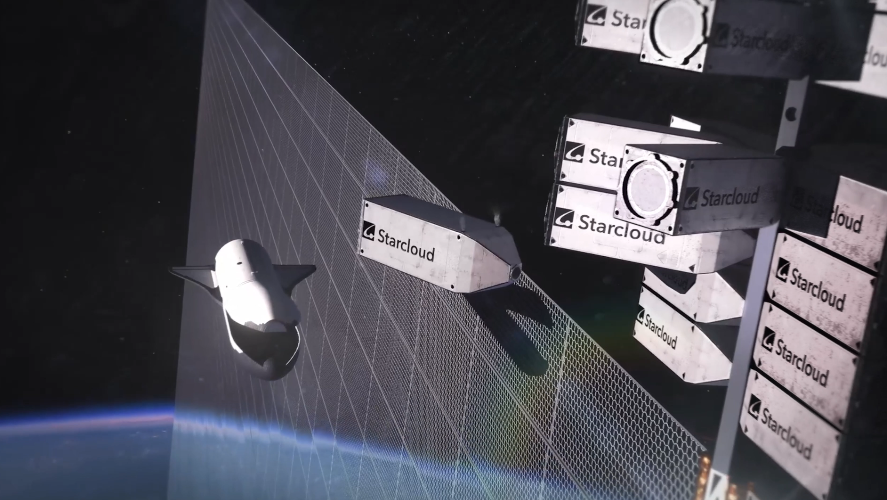
Starcloud-1 has broken the reliance of previous similar experiments on large space platforms, integrating a data center-grade GPU into a 60kg commercial small satellite for the first time and laying a solid foundation for the commercialization of space computing power. The satellite is also loaded with Google’s Gemma large language model to complete in-orbit inference, fine-tuning and training tasks. Starcloud-1 boasts prominent core advantages: it achieves uninterrupted renewable energy supply through a giant solar panel without the need for backup power sources, and dissipates heat by leveraging the near-absolute zero vacuum environment in space, thus breaking free from the dependence of ground data centers on cooling towers. According to Starcloud’s estimates, with the continuous decline in launch costs, space data centers will generate extremely low carbon emissions into the atmosphere during their operational life cycle, and their unit energy consumption cost is about 10 times lower than that of ground-based facilities.
Going forward, Starcloud will push forward the launch of Starcloud-2 to enhance storage and bandwidth capabilities, with a long-term plan to build a 5-gigawatt orbital data center platform. On the commercial front, Crusoe, a US-based AI data center builder, plans to deploy cloud computing services on subsequent satellites by the end of 2026 and provide space-side GPU computing power services in early 2027. Starcloud predicts that nearly all new data centers are expected to be deployed in outer space within the next decade, which may bring about a disruptive restructuring of the global computing power landscape.
Faced with this industrial transformation opportunity, Shanghai Shunho New Material Technology Co., Ltd. (SHUNHO) has completed forward-looking layout in advance. By strategically investing in core enterprises, SHUNHO is driving the development of domestic space computing power to keep pace with international cutting-edge technologies. In June 2025, keenly insight into the disruptive value of space computing power for the AI industry, earth observation and other fields, SHUNHO made a strategic investment of RMB 110 million in Beijing Orbit Chenguang Technology Co., Ltd. (hereinafter referred to as "Beijing Orbit Chenguang") and incorporated its core management team at the same time. This layout is not only a capital investment, but also realizes in-depth synergy of technical resources and management experience, marking SHUNHO’s official entry into the highly promising space computing power track in the AI era and the opening of a new development pattern.
As the first incubated industrial project of Beijing Star Future Space Technology Research Institute, Beijing Orbit Chenguang focuses on the construction of a giant computing power satellite constellation in dawn-dusk orbit, whose core technologies are highly aligned with the global development trend of space computing power. In the field of energy supply, relying on the characteristics of dawn-dusk orbit, it achieves 24/7 uninterrupted solar power supply and significantly improves the satellite’s power density with new gallium arsenide solar cells, solving the problem of continuous energy supply for space computing power equipment. Aiming at the pain point of heat dissipation for high computing power equipment, it has developed a new type of radiation cold plate and two-phase fluid loop technology, which can efficiently radiate waste heat of equipment to the extremely cold cosmic environment and get rid of the dependence of ground data centers on cooling towers and fresh water. In addition, the team has achieved phased results in key fields such as massive space-earth data transmission, space environment protection and large-scale panel deployment, laying a solid technical foundation for the stable operation of computing power satellites.
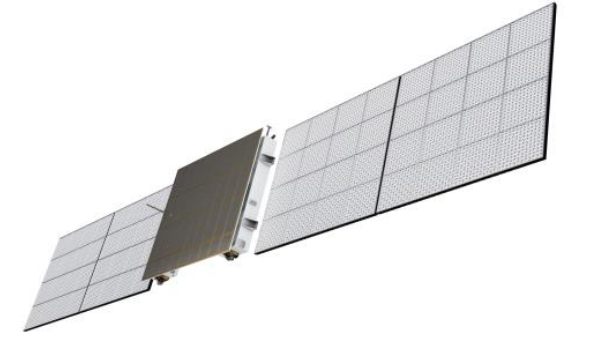
According to the plan, Beijing Orbit Chenguang’s first computing test satellite is expected to be launched into orbit by the end of 2025. (Note: The actual launch time may be subject to change due to various factors affecting space project launches, which does not constitute a launch commitment. Please pay attention to relevant risks.) This progress keeps pace with international cutting-edge technologies, making it one of the early test satellites in China focusing on commercial space computing power.
From the perspective of industrial development, the successful launch of Starcloud-1 has verified the feasibility of space computing power moving from concept to implementation. SHUNHO’s forward-looking layout has not only enabled the enterprise to seize the first-mover advantage in the track, but also helped China take the initiative in the restructuring of the global computing power landscape. In the future, SHUNHO will continue to deepen synergy with Beijing Orbit Chenguang, promote the large-scale construction and commercial implementation of domestic computing power satellite constellations, and contribute to the high-quality development of China’s space economy. At the same time, through this transformation and upgrading to the high-tech field, SHUNHO will further expand its diversified development pattern, continue to benefit from the development of the entire commercial aerospace industry chain, create greater value for shareholders, customers and society, and write a new chapter in the company’s leap to an innovation-driven enterprise.

